Source ASTM O Ring Sealing Metal Ring for Pumps, Oil Fields, and Industry
Find 30 listings for ASTM O ring sealing metal ring options including metal c rings and stationary seals. Compare specifications like material, pressure ratings, and customization availability from verified manufacturers.
Key considerations
Products List




Comprehensive Sourcing Guide
Strategic Sourcing Guide for ASTM O-Ring Sealing Metal Rings
Understanding Product Classifications and Technical Attributes
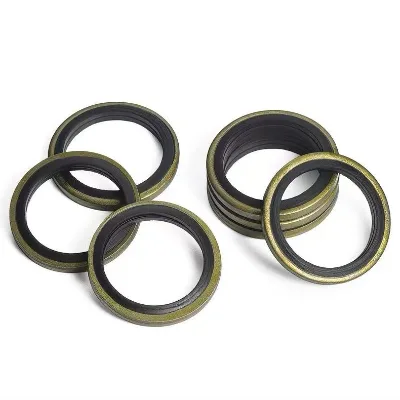
When sourcing components described under the core keyword of "ASTM O-ring sealing metal ring," buyers must first navigate the complex landscape of product nomenclature and technical classification. The market presents a diverse array of items that, while sharing the functional goal of sealing, differ significantly in material composition, structural design, and application scope. Based on current market observations, the product category encompasses distinct types such as "Metal C Rings for Internal Pressure," "O Rings," and specialized "Shaft Seals." It is critical to recognize that the term "O-Ring" in a metal context often refers to specific sealing geometries like the "O-Ring" shape attribute observed in listings, which may be constructed from composite materials like "Metal Rubber" or entirely from metals such as "Tungsten Carbide" and "Stainless Steel."
The technical specifications for these components vary widely depending on the intended operational environment. For instance, some products are engineered as "Stationary Seals" with an "O-Ring" shape, while others are designed as "Ultra-High-Speed Mechanical Seals" or "High Temperature Mechanical Seals." The structural integrity of these rings is often defined by their balance and pressure ratings. Buyers should look for attributes such as "Balanced" designs, which are essential for high-speed applications to minimize vibration and wear. Furthermore, the pressure capabilities are a primary differentiator, with specific listings noting "High Pressure Mechanical Seals" and "High Pressure" performance characteristics. These attributes suggest that not all metal sealing rings are suitable for low-pressure applications; the selection process must align the physical properties of the ring with the system's pressure demands.
Material selection is another pivotal technical factor. The supply chain offers options ranging from "Metal Rubber" composites to pure "Stainless Steel" and "Tungsten Carbide." The choice of material directly influences the ring's resistance to corrosion, temperature extremes, and mechanical abrasion. For example, "Tungsten Carbide" is often associated with extreme durability and high-temperature resistance, with some specifications noting the ability to "Withstand Transients in Excess of 2000° F." In contrast, "Stainless Steel" rings are typically selected for their corrosion resistance in general industrial settings. The "Shape" attribute, specifically the "O-Ring" configuration, remains a constant design element, but the cross-sectional geometry and hardness can vary significantly based on the material and the specific sealing requirement, such as "Internal Pressure" containment versus dynamic shaft sealing.
Compliance, Certification, and Standard Verification
Navigating the compliance landscape for metal sealing rings requires a rigorous approach to verifying standards and certifications. While the core keyword references "ASTM," which is a widely recognized standard-setting organization, the actual product listings often cite a mix of international and specific industry standards. Buyers must verify that the supplier can provide documentation for relevant standards rather than assuming universal compliance. Observed product attributes indicate that suppliers frequently reference "Dnv ISO9001" and "SGS" as key certification markers. These certifications serve as third-party validations of the manufacturer's quality management systems and product consistency.
The standardization of the products themselves is equally critical. Listings show a dichotomy between "Standard" and "Nonstandard" configurations. Some products are explicitly described as "Standard Nonstandard according your request," indicating a high degree of flexibility in manufacturing but requiring clear communication from the buyer regarding their specific dimensional and material needs. In some cases, specific models like "SUNWELL 910" or "SUNWELL 1710" are associated with particular standard configurations, while others, such as "SR2024041316," may represent custom or project-specific designs. The "prod_standard" attribute sometimes lists specific dimensions, such as "1/4"-3/4"", which serves as a baseline for comparison but should not be taken as a universal range for all metal rings.
Buyers should be cautious regarding the application of specific standards like "ASTM D2000," which is noted in background knowledge but not explicitly confirmed in the primary product facts. Instead of assuming a product meets ASTM D2000, procurement teams should request specific test reports or material certificates that confirm compliance with the relevant ASTM or ISO standards for the specific material and application. The presence of "Dnv ISO9001" and "SGS" certifications suggests that the suppliers are accustomed to meeting rigorous international quality benchmarks, but the specific technical standard for the metal ring itself must be confirmed on a per-order basis. This verification process is essential to ensure that the sealing rings will perform safely in critical applications, particularly in industries like "Gas and Oil Field" where failure can have severe consequences.
Cost Drivers and Pricing Dynamics
The pricing structure for metal sealing rings is influenced by a complex interplay of material costs, manufacturing complexity, and order volume. The observed market data reveals a significant price range, spanning from $0.01 to $1500 USD. This wide variance is not arbitrary but reflects the diversity in product types, from simple "O-Ring" shapes to complex "Double-End" mechanical seals made of expensive materials like "Tungsten Carbide." The cost drivers can be categorized into material composition, customization requirements, and production scale.
Material selection is the most immediate cost factor. Rings made from "Stainless Steel" generally carry a different price point compared to those made from "Tungsten Carbide" or "Metal Rubber" composites. The latter materials often involve more complex processing, such as "Casting, Forging, Assembly Line Processing," which adds to the manufacturing cost. Additionally, the "High Temperature" and "High Pressure" capabilities of certain rings necessitate higher-grade materials and more stringent quality control, further driving up the unit price.
Customization is another significant driver. While "Customization" is listed as "Available" and "OEM" is marked as "Yes" or "Acceptable," these services come at a premium. Products that are "Nonstandard" or require specific "prod_standard" dimensions that deviate from the norm will incur higher costs due to the need for specialized tooling and setup. The "MOQ" (Minimum Order Quantity) range of 1 to 10,000 units also plays a crucial role in pricing. Buyers ordering small quantities, such as 1 unit, will likely face a higher per-unit cost compared to those placing large orders of 10,000 units. The "Business Type" of the supplier, whether a "Manufacturer and Trading Company," can also influence the final price, as trading companies may add a margin, whereas direct manufacturers might offer more competitive rates for bulk orders.
Typical Applications and Industry Requirements
The versatility of metal sealing rings allows them to be deployed across a broad spectrum of industrial sectors, from light manufacturing to heavy industry. The primary application scenarios identified include "Daily Industry" and "Heavy Industry," with a specific emphasis on the "Gas and Oil Field." In these high-stakes environments, the reliability of the seal is paramount. The "Working Temperature" capability, such as withstanding transients in excess of 2000° F, makes these rings suitable for extreme conditions found in oil extraction and refining processes.
Beyond the energy sector, the "Industrial" usage category encompasses a wide range of machinery requiring dynamic or static sealing. The "Shaft Seal" and "Stationary Seal" types are particularly relevant in pumps, compressors, and hydraulic systems where fluid containment is critical. The "Balance" attribute, noted as "Balanced," is essential for high-speed rotating equipment, ensuring that the seal can operate efficiently without generating excessive heat or vibration. The "Speed" attribute, specifically "Ultra-High-Speed Mechanical Seal," indicates suitability for turbines and high-velocity pumps.
The "Application Scenario" of "Can Be Used in Daily Industry or Heavy Industry" suggests that these components are adaptable to various load conditions. For instance, "Metal C Rings for Internal Pressure" are likely used in pressure vessels and piping systems, while "O Rings" in "Metal Rubber" or "Stainless Steel" may be used in general fluid handling. The "Industry" specification of "Gas and Oil Field" highlights the need for seals that can resist harsh chemicals, high pressures, and fluctuating temperatures. Buyers in these sectors must ensure that the selected ring not only meets the mechanical requirements but also complies with the safety and environmental regulations specific to the industry.
Supplier Evaluation and Manufacturing Capabilities
Selecting the right supplier is as important as selecting the right product. The market data indicates a mix of "Manufacturer and Trading Company" business types, each offering different advantages. Manufacturers typically provide direct access to production capabilities, such as "Casting, Forging, Assembly Line Processing," which can be beneficial for custom orders. Trading companies may offer a broader range of products and faster logistics but might have less control over the manufacturing process.
Key evaluation criteria should include the supplier's "Design Team" size, which is noted as "3-5 Members" in some listings. A dedicated design team suggests the capability to handle custom engineering requests and provide technical support. The "Quality" assurance process is another critical factor, with "100% Inspection" being a highlighted attribute. This level of quality control is essential for ensuring that every metal ring meets the specified tolerances and performance standards.
The "Country of Origin" and "prod_origin" are also relevant for logistics and supply chain stability. Products are noted to originate from "China," with specific locations like "Zhuzhou Hunan" and "Qingdao Shandong China." These regions are known for their manufacturing clusters, particularly in metal processing and mechanical components. Buyers should verify the specific location to assess the supplier's proximity to raw material sources and their logistical capabilities. Additionally, the "Export Markets" being "Global" indicates that the suppliers are experienced in international trade and compliance, which can be a positive indicator of reliability.
Quality Control and Long-Term Procurement Considerations
Ensuring the long-term reliability of metal sealing rings requires a robust quality control strategy and a focus on sustainable procurement practices. The "Quality" attribute of "100% Inspection" suggests that suppliers are committed to minimizing defects, but buyers should also implement their own incoming inspection protocols. This is particularly important for critical applications in the "Gas and Oil Field" where seal failure can lead to significant downtime or safety hazards.
Packaging is another aspect of quality control that should not be overlooked. The "prod_packing" varies from "Wooden Box" to "Standard Packing" and "Woven Bags, Cartons or by Customer Requirements." Proper packaging ensures that the rings arrive in pristine condition, free from damage or contamination that could compromise their performance. For high-value items like "Tungsten Carbide" seals, specialized packaging is essential to prevent scratches or deformation.
Long-term procurement considerations involve building a relationship with suppliers who offer "Customization" and "OEM" services. This flexibility allows buyers to adapt to changing operational needs without switching suppliers. The "Standard Nonstandard according your request" capability ensures that the supply chain can accommodate future design changes. Furthermore, understanding the "Lead Time" and "MOQ" constraints is vital for inventory management. While specific lead times are not provided in the data, the wide range of MOQs (1-10,000) suggests that suppliers can accommodate both small-batch prototyping and large-scale production runs.
In conclusion, sourcing ASTM O-ring sealing metal rings requires a detailed understanding of technical specifications, rigorous verification of standards and certifications, and a strategic approach to supplier evaluation. By focusing on material quality, manufacturing capabilities, and quality control processes, buyers can secure reliable sealing solutions that meet the demanding requirements of modern industrial applications. The diversity of the market, from simple "O-Ring" shapes to complex "Double-End" mechanical seals, offers ample opportunities for finding the right fit, provided that the procurement process is grounded in evidence and technical due diligence.
FAQs
What materials are used for ASTM O-ring sealing metal rings?
These rings are constructed from materials like metal rubber, tungsten carbide, and stainless steel. The specific material choice depends on the required resistance to corrosion, temperature extremes, and mechanical abrasion for the intended application.
Can these rings withstand high temperatures and pressures?
Yes, certain models are designed as high-temperature and high-pressure mechanical seals. Some tungsten carbide variants can withstand transients in excess of 2000° F, making them suitable for gas and oil field operations.
Which certifications do suppliers typically provide for these products?
Suppliers often provide Dnv ISO9001 and SGS certifications to validate their quality management systems. These third-party validations ensure product consistency and adherence to rigorous international quality benchmarks for critical sealing applications.
How does customization affect the minimum order quantity?
Customization is available, and the minimum order quantity ranges from 1 to 10,000 units. Nonstandard configurations or specific requests may require higher volumes to justify specialized tooling and setup costs during the manufacturing process.
What are the common shapes and types of these sealing rings?
Common shapes include O-rings, while types range from stationary seals to ultra-high-speed mechanical seals. Specific designs like Metal C Rings for internal pressure or double-end structures address different sealing requirements and operational speeds.
Where are these metal sealing rings typically manufactured?
Products originate from China, with specific manufacturing hubs located in Zhuzhou Hunan and Qingdao Shandong. These regions are known for their metal processing clusters and offer global export capabilities for industrial buyers.